































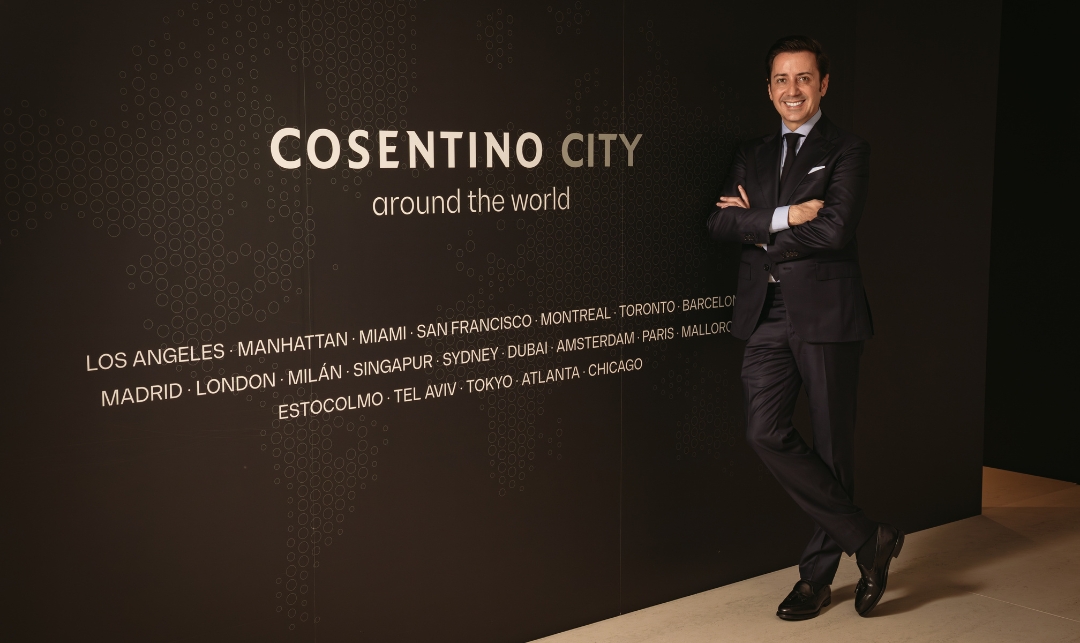
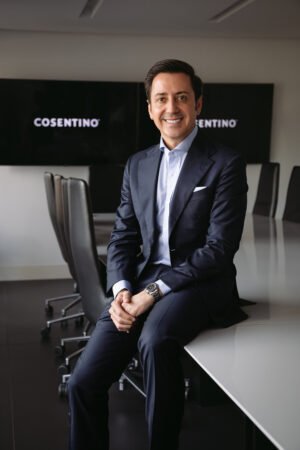
When Eduardo Cosentino moved to Houston to lead Cosentino’s expansion in the United States, he quickly discovered that success would require more than translating a proven model from Spain. The pace of business was faster, customer expectations were higher, and the path to growth demanded a new way of thinking.
Over the years, Cosentino has helped transform the family-owned surfacing company into a major player across the Americas, guiding its evolution through bold operational shifts, new partnerships, and a relentless focus on listening to customers. In this interview, he reflects on the cultural and strategic lessons that shaped that journey, the power of humility in leadership, and what it means to build a company designed to last for generations.
WHEN YOU FIRST ARRIVED IN HOUSTON, WHAT SURPRISED YOU MOST ABOUT THE U.S. MARKET COMPARED TO SPAIN?
Cosentino: What surprised me most was the pace of doing business. In Spain, relationships and decisions often develop over time. In Houston, I quickly saw that customers are straight to the point and expect immediate solutions. That shift in expectations was eye-opening, and it made it clear to me right away that we would need to adapt quickly if we wanted to succeed.
WHAT WERE THE BIGGEST CULTURAL OR OPERATIONAL HURDLES YOU FACED WHEN EXPANDING COSENTINO IN THE U.S.?
Cosentino: The biggest hurdle was recognizing that the U.S. market required a very different operating model than what had worked in Spain. Customers here expected broader product access and multiple purchasing options, which meant we had to rethink our operating approach. We decentralized decision-making, empowered local managers, and expanded into new distribution channels, from retail to builders and designers. That shift was not only a cultural adjustment but also a strategic transformation, and it became the foundation for doubling our U.S. sales in the years that followed.
HOW DID YOU APPROACH SCALING THE BUSINESS WHILE STILL LEARNING THE LANGUAGE AND ADAPTING TO A NEW ENVIRONMENT?
Cosentino: I told myself that the only way to understand the market was to listen. So that’s exactly what I did. I traveled across the country, visiting hundreds of customers, asking questions, and paying close attention to what they said about our products and service. I also studied English for an hour every morning so I could continue to improve. Those conversations with clients and employees were the foundation for changing our business model and ultimately opening the market from just over 100 customers to more than 15,000.
WHAT ADVICE WOULD YOU GIVE OTHER INTERNATIONAL LEADERS TRYING TO BREAK INTO THE U.S. MARKET TODAY?
Cosentino: My advice is to approach the U.S. as many different markets, not just one. What works in Miami may not work in Chicago or Los Angeles. Take the time to research regional differences, including consumer expectations, job markets, and cultural nuances, because those details will shape your success. Also, be prepared to adapt your leadership style. American teams thrive when they’re given autonomy and responsibility, and if you can create that trust and surround yourself with the right people, they’ll help you grow faster than you imagined.
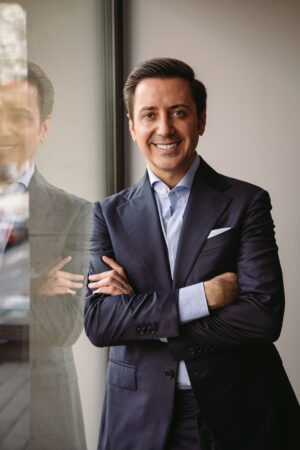
WHAT UNIQUE ADVANTAGES—AND CHALLENGES—DOES BEING A FAMILY-OWNED COMPANY BRING WHEN COMPETING AGAINST MUCH LARGER CORPORATIONS?
Cosentino: The advantage is that we can move quickly. We don’t have to wait for layers of approvals, and we aren’t under pressure to hit short-term results. Instead, we make decisions with the next generation in mind, which gives us a different kind of freedom. The challenge, of course, is competing with companies that have enormous resources. But I believe the personal connection we have, within our family, with our employees, and with our customers, is invaluable.
IN WHAT WAYS DOES BEING PART OF A FAMILY BUSINESS INFLUENCE YOUR LEADERSHIP STYLE PERSONALLY?
Cosentino: Growing up, I spent time in the quarries and later worked across several divisions of the company. That experience gave me a deep understanding of how the business operates at every level, from production to sales to customer service. It also gave me a strong sense of responsibility, not only to my family but to the employees who have built their lives and careers around this company. Even today, I speak with my parents and siblings daily. That constant connection has shaped me as a leader who values long-term vision, humility, and putting people first.
YOU DOUBLED U.S. SALES AFTER CHANGING THE BUSINESS MODEL—WHAT WERE THE THREE KEY STEPS YOU TOOK BEFORE MAKING THAT LEAP?
Cosentino: The first step was listening carefully to our customers to understand their needs. The second was diversifying our channels by expanding into retailers like Home Depot and Lowe’s while also strengthening our presence with builders, architects, and designers. The third was empowering local managers with decision-making authority so we could respond faster to opportunities. Together, those steps gave us the foundation to grow quickly while building trust across different segments of the market.
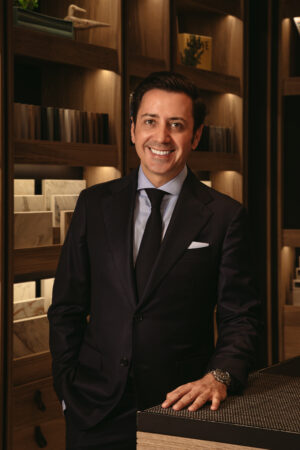
CAN YOU SHARE A MOMENT OF DOUBT OR RISK IN THAT TRANSITION—AND HOW YOU NAVIGATED IT?
Cosentino: There were certainly moments of doubt. We were leaving behind a model that had been successful for us in Spain, and there was no guarantee it would work in the U.S. What helped us push through was the realization that standing still was the bigger risk. Our customers were telling us what they needed, and by listening to them, we gained the confidence that change was the right decision.
WHAT SYSTEMS OR STRUCTURES DID YOU PUT IN PLACE TO MAKE THE NEW MODEL SUSTAINABLE LONG-TERM?
Cosentino: We knew growth had to be about more than numbers. We adopted a structure that empowered local teams with the authority to make decisions quickly. We invested in physical showrooms in the heart of cities across the country so customers could experience the brand firsthand. And we continued to innovate with materials like Silestone and Dekton. These systems ensured that our growth was scalable and sustainable, setting us up for decades of success.
HOW DO YOU DECIDE WHEN IT’S TIME TO DISRUPT YOUR OWN BUSINESS MODEL AGAIN?
Cosentino: I look for signs from our customers and from the market. Cosentino was built on innovation, and we have never been afraid to reinvent ourselves. The story of Silestone is a perfect example. That experience taught me that disruption is not something to fear, but something to embrace when the time is right. If you listen carefully, the market will tell you when it is time.

WHAT’S THE MOST IMPORTANT LEADERSHIP LESSON YOU’VE LEARNED FROM YOUR JOURNEY?
Cosentino: Humility. When I arrived in the U.S., I did not know the language, and I was leading a business far from home. That forced me to be humble and to surround myself with the best people that I could rely on to make the right decisions. Over time, I have come to realize that humility is one of the most powerful tools a leader can possess. It enables you to adapt, continue learning, and build trust.
HOW HAS YOUR DEFINITION OF SUCCESS EVOLVED OVER YOUR CAREER?
Cosentino: At the beginning, success meant proving that I could help the business grow in a new country. Today, my definition is broader. Success is about building something that endures for the next generation, creating opportunities for our employees, and making a positive impact in the communities where we operate. Growth is important, but legacy and impact are what truly matter.
WHAT EXCITES YOU MOST ABOUT THE FUTURE OF COSENTINO AND YOUR ROLE IN SHAPING IT?
Cosentino: I am especially excited about Cosentino’s future in the U.S. The opening of our Jacksonville manufacturing facility is a huge milestone and will allow us to be closer to our customers, respond faster to demand, and operate more sustainably. At the same time, we are continuing to push boundaries with new materials and technologies. For me, the most exciting part is knowing that our best chapter is still ahead and that I have the privilege of helping to shape it.