

































Multinational companies have been sourcing talent from around the world for decades. Despite this reality, managing country-specific laws, compliance requirements, and global payroll systems has never been simple. Getting connected with quality candidates is just part of the equation; the rest of the challenges come later. These complexities aren’t just limiting companies from sourcing talent around the world—they’re also stopping impressive individuals from landing the right roles.
Oyster HR is an employment platform built to simplify hiring and reduce the complexities of building global teams. Designed and scaled throughout the chaos of the COVID-19 pandemic, Oyster didn’t just solve a problem; it met the moment. Today, Oyster is valued at $1.2 billion, operates in more than 150 countries, and employs 500 people who represent more than 70 different nationalities.
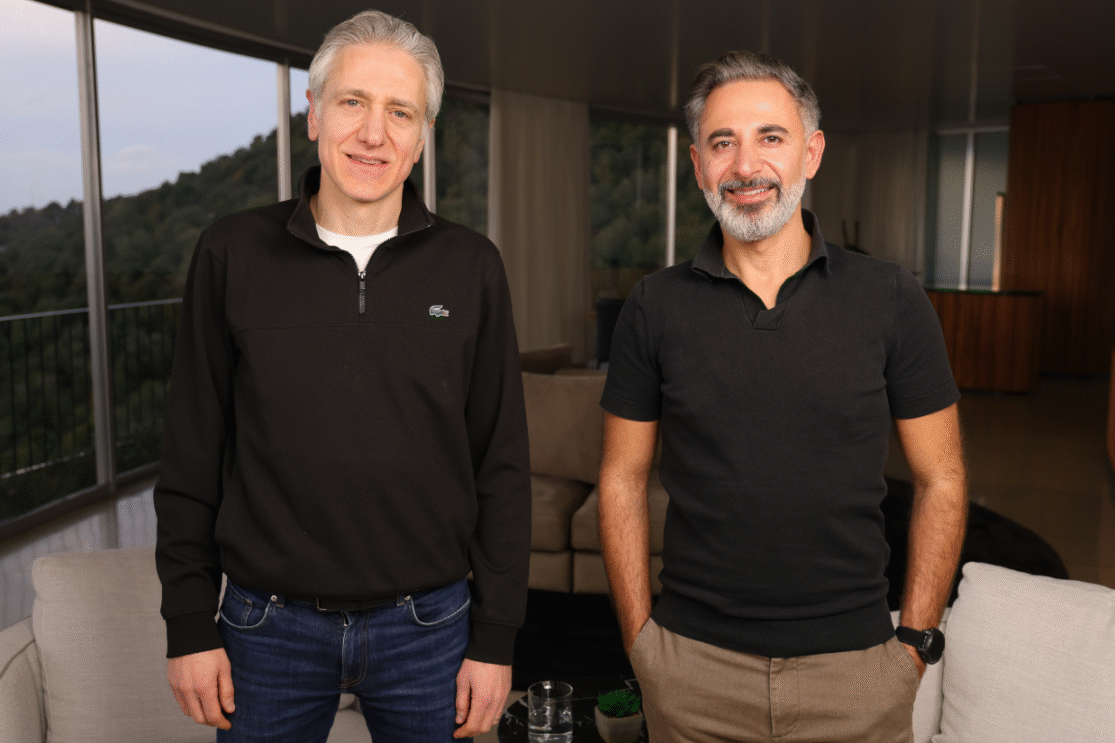
As we hopped on a call with the founder, Tony Jamous, and Oyster’s new CEO, Hadi Moussa, the value of the platform became clear in seconds. One leader dialed in from London, the other from Cyprus, reflecting in real-time the power of borderless collaboration. If leadership can operate from anywhere, why shouldn’t employees?
WHEN BORDERS LIMIT OPPORTUNITY
Oyster’s grand vision wasn’t developed in accelerators or pitch meetings. It was shaped much earlier, by two children who learned much too young that finding opportunity might come with the biggest sacrifice of all: leaving home.
The first decade of Jamous’ childhood was marked by Lebanon’s civil war. Once the war ended, rebuilding the country was slow-moving and complicated, leaving young people with little hope for the future. “When I was 17, I moved to France to study computer science because that was the only path forward,” Jamous says.
Jamous and Moussa first met during the search for Oyster’s new CEO, but the pair spent their youth in the same village in Lebanon. “The first house you can see from Tony’s house is actually my grandparents’ house,” Moussa says with a laugh. “The easiest way for him to have found me would have been to just open his window and shout.”.
Moussa’s childhood, like Tony’s, was constantly marked by duality. Memories of running away and sheltering in place exist next to warm community moments and laughter with loved ones. “We both made the decision that if we wanted to find opportunity, we needed to go somewhere else,” Moussa says. “That’s what Oyster is trying to address—allowing people to not have to make that choice.”

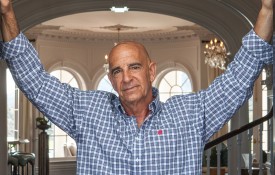
Oyster CEO Hadi Moussa and Founder, Tony Jamous
FAILURES OF HIS FIRST UNICORN
Achieving unicorn status in six years isn’t easy, but this isn’t the first time Jamous has done it. After university, he founded Nexmo, an API company that was later acquired by Ericsson. Because he needed quality talent to support operations everywhere, hiring employees all around the world was a daily occurrence.
“We hired people in 40 countries,” he says. “We found amazing talent in emerging economies, but it was a nightmare to hire them.”
To make it happen, Jamous and his team created employment entities around the world, essentially building their own infrastructure to hire and manage employees. “We spend millions of dollars on payroll, HR, and compliance,” he says, “yet we still failed to create a great employee experience.”
Jamous absorbed the failure personally, and it took an immense toll. With the help of a leadership coach and a lot of inner work, he realized that he was a reactive, fear-driven leader. “I could see the risk before anybody else could see the risk, and I would react prematurely,” he says. “I was essentially in PTSD zone all the time.” After Nexmo’s acquisition, he decided to focus on repairing his relationship to his body, to others, and to leadership entirely.
It didn’t take long before the next endeavor became clear. At a retreat in 2019, an idea began to take shape. “I received insight to start a global employment platform to make planet earth one employment market by using software to democratize access to job opportunities around the world,” he says. His therapist advised him not to make any major decisions for 10 days. “The next day, I went and incorporated Oyster.”
BUILDING AN IDEA
There wasn’t even a framework for the platform before Jamous was hunting for funding. Armed with nothing more than a bold vision and an investment memo, he began meeting with investors. As soon as a term sheet was signed, the COVID-19 lockdown began.
“And then from there, it was crazy,” he says. “We knew this was going to be much bigger than we thought, much faster.” Almost overnight, remote work became a global necessity, and the market began demanding a solution like Oyster.
But the catch? The product didn’t actually exist yet. “In the beginning, we didn’t have time to have products, so we had to sell the product as a service first,” Jamous says. “Then, behind the scenes, I had people making it look like software.” Because Oyster’s value was first in the services it provided, the team was incredibly close to the customers. “Our software road map was 100% driven by what our customers wanted to see.”
Quick growth early on garnered investor attention. Oyster successfully raised $50 million in the first two years and has raised nearly $300 million in total. But finding the right investors was about more than money; these partnerships required a shared vision. In Oyster’s case, mission alignment was a top priority,” Jamous says. “I needed people to understand that, yes, we’re going to make a lot of return, but at the same time, this is about reversing brain drain and impacting wealth inequality.”
From the very start, Oyster was a human-first organization. Jamous is committed to designing a culture that emphasizes psychological safety and meaningful work. The company’s name is a reflection of just that. “I’m sure you’re familiar with the expression, ‘The world is your oyster.’ Here, it means that any individual anywhere on planet Earth can find jobs,” he says, his face beaming. “The world is your opportunity.”
MISSION OVER EGO
As Oyster matured, Jamous began to feel a pull. “I realized that I needed to not be the CEO of Oyster anymore, but I didn’t understand why,” he says. Over the following quarters, team feedback began to reveal the need for a CEO who was closer to the operation. “They needed to not only be able to design a strategy, but execute and scale it well,” Jamous says.
Because the realization came organically, and Jamous wasn’t fearful of the transition, he approached the board about finding a new CEO who could expertly guide the organization through its next phase. The search was a multiyear process. The board interviewed more than 50 executives from all around the world, but it was Moussa—who spent his childhood a stone’s throw away from Jamous—that the board selected. Jamous abstained from the final vote, but he admits, “I’m super glad they chose Hadi, because he was also my favorite choice.”
The entire process felt serendipitous. But aside from that, Moussa brings the exact skills Oyster needs moving forward. With leadership experience at some of the most well-known international companie—like Meta, Airbnb, and even a digital staffing firm—he comes with deep experience scaling international organizations and finding a way through the very pain points that Oyster targets.
“We had to figure out solutions that were never optimal enough. Whether they didn’t have the right technology behind them or the right level of service,” Moussa says. “Oyster brings these two things together and addresses a clear customer need.” But for him, this new leadership endeavor is personal.
“The idea that someone does not have to choose between their opportunity and the people they love—it really resonated.”