































In March 2020, volatility markets stopped behaving the way they were supposed to.
At the time, I was running the VIX book at JP Morgan. One of the core relationships we monitored — the spread between the VIX complex and S&P options — moved to previously unheard-of levels. What normally traded within a tight range blew out to extremes that most models flagged as unsustainable.
There were funds that tried to fade it based on that logic. Some of them didn’t survive and nearly all of them had to pull out after realizing that they were dealing with something that legacy models couldn’t comprehend.
Holding the position required a different kind of judgment. You had to pay attention to flows, to how hedging demand was evolving, and to the broader reality that the world was effectively shutting down. It was a stark reminder: The models are useful, but tools and data can only take you so far. Throughout my career I’ve seen over and over that in markets, the true edge belongs to those who can interpret that data and use those tools to make the best possible decisions.
But any trader’s interpretation is only as good as the information and technology they have available to them.
I’ve worked across exotics desks, hedge funds, and index volatility trading at large banks. The difference in technology between those environments was significant. At a bank like JP Morgan, we had internal systems, automation, and infrastructure that were years ahead of what most buy-side desks could access. At smaller funds, we were often working with just a Bloomberg terminal and Excel, trudging uphill to compete with firms that had entire teams building models.
AI Is Closing Wall Street’s Technology Gap
That gap defined the playing field. But over the last year, I’ve seen that gap narrow, and in some cases, flip entirely.
Today, you can access institution-quality data for a relatively low cost and pair it with large language models that can assist with building analytics, running calculations, and structuring workflows. It’s not perfect — you still need a seasoned trader with a great eye to spot the minute mistakes that could prove killer — but it’s good enough to materially change what a single person can do.
Over the past several months, I’ve been building a volatility analytics platform designed around how traders actually operate. That means pulling together a wide range of inputs, like term structure, skew, relative value across maturities, positioning, and cross-asset relationships, and making them usable in one place.
Historically, building something like that would have required a team of developers, quantitative researchers, analysts and thousands of hours. Now, it’s feasible for a single operator to build a meaningful portion of it independently, provided they understand the underlying problems they’re trying to solve.
The Rise of the One-Person Trading Desk
You’re seeing similar efforts across the market.
Former traders are launching platforms that replicate core pieces of what used to be locked inside bank systems. Others are building tools that ingest exchange data and map positioning in ways that previously would have been impossible without a big bank’s infrastructure. Independent research has also evolved – highly specialized operators are producing analysis that, in some cases, is more actionable than what large institutions provide.
What stands out is that large institutions are not necessarily leading this shift. They still have advantages — capital, distribution, and scale to name a few — but they are also constrained by their size. Every step of the process has to go through a committee and be exposed to an endless parade of risk analysis. Big ships turn very slowly and big banks building new systems internally is even slower. Remarkably, in some cases, traders at top banks are now working without top-of-the-line tools that were built externally in a matter of months.
These tools widen the landscape of the market and level the playing field. They’re innovations that give everyone a chance to compete with the big banks, whether they’re small firms or retail traders. That creates an unusual dynamic in the market and upsets the balance of power.
When Everyone Has the Tools, Judgment Becomes the Edge
The traditional assumption was that access to better technology translated directly into better outcomes. That assumption is still true, but the gap in technology is less than it’s ever been. As these tools become more widely available, the differences between success and failure are increasingly driven by how those tools are applied.
That part hasn’t changed. The barrier to building meaningful tools is lower than it has ever been. The barrier to generating consistent returns is not.
If more people have access to similar capabilities, then performance depends less on what you have and more on how you think. The edge moves away from access and toward interpretation – how you structure trades, how you understand positioning, and how you respond when markets stop behaving the way they’re supposed to.
Just like it did in 2020, the line between success and failure still all comes down to how well you see the market’s flow. And as more participants gain access to the same capabilities, the distinction between them becomes sharper, not broader.
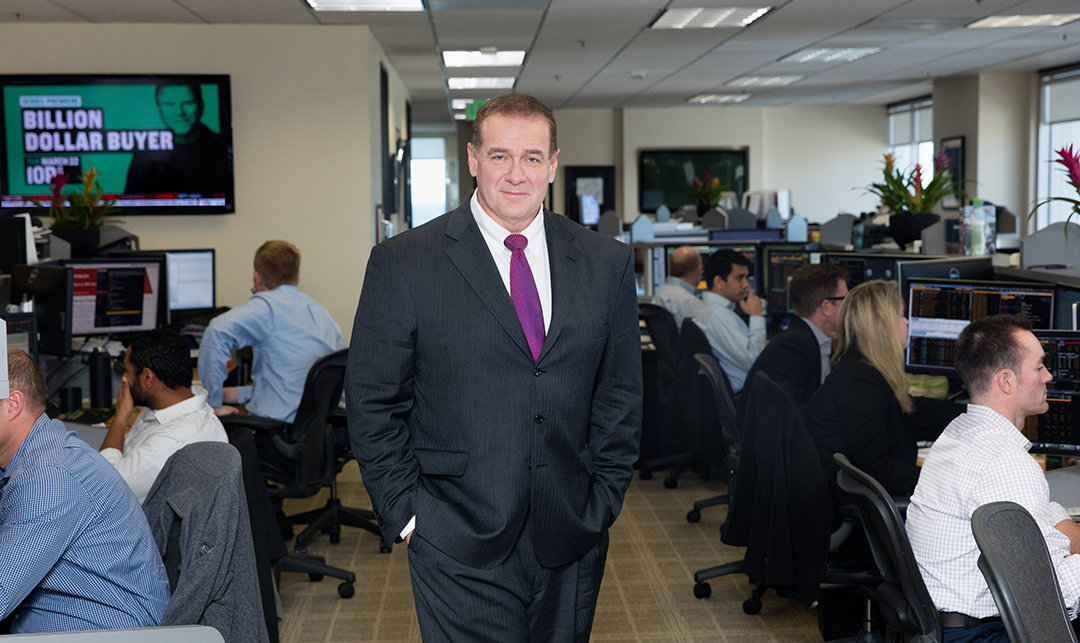
Ishan Malik is Managing Director, Index Volatility at BGC Group. Over nearly two decades, he has traded equity derivatives across the buy-side and sell-side, including senior roles at JPMorgan Chase & Co., BNP Paribas, and Verition Fund Management.