





















When markets tighten, most leaders do the same thing: they wait. They pause hiring, delay expansion, and tell themselves they’ll move once conditions feel “normal” again.
But some of the most durable companies were built in moments when normal wasn’t on the table. Not because their founders were fearless — because they paid attention to what people still needed, even in a downturn.
Downturns don’t eliminate demand—they expose what people still need. That’s why companies like Airbnb and Uber took off in the wake of 2008: they built around necessity and value, not optimism
A similar lesson shaped how I built my business.
In 2008, as the financial crisis spread, I was ready to start something — but I knew it had to be tied to a basic need. People might cut spending, but they still have to get to work, move goods, and keep life running. Fuel fit that reality. So my partner, Yuval Amiel, and I bought a struggling gas station in New Jersey and learned the business the hard way — by operating it ourselves and staying close to every detail.
Within a few years we expanded across the state. Then Hurricane Sandy hit, and nearly everything we had built was wiped out. We lost locations, and we didn’t have the insurance outcomes we expected. It was the kind of moment that forces a choice: protect your balance sheet, or show up for the people who depend on you.
We kept four stations running with generators, sourced fuel from out of state, and prioritized first responders and local families. We didn’t make money doing it — but it was the right call. It also taught me something I’ve carried ever since: in a crisis, your reputation is built on whether you’re useful.
After Sandy, we made a decision to start over in Las Vegas. The economy was still recovering, and plenty of assets were under-managed or simply neglected. We leased a shut-down station and rebuilt again — and as we looked around, we saw a bigger gap: professional drivers. Long-haul truckers needed more than a pump. They needed safe places to park, clean showers, reliable food options, and consistency — the basics that make life on the road manageable.
That insight led us to build and operate full-service travel centers designed around what drivers actually value. Over time, LV Petroleum grew into a nationwide network — travel centers, gas stations, and quick-service restaurants — built around a simple operating idea: if you take care of the essentials, you earn trust, and trust scales.
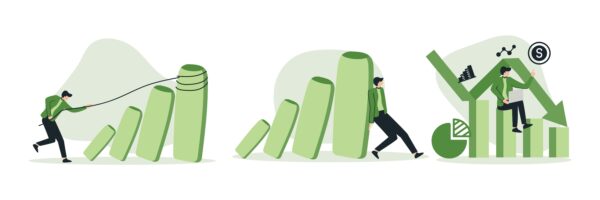
If you’re considering building during a downturn, here are three principles I’ve seen hold up:
1) Anchor your business to necessity.
In uncertain periods, demand doesn’t disappear — it shifts toward essentials. Fuel, food, healthcare, logistics, housing. If you can serve a real need, you’re not relying on optimism to survive.
2) Look for what’s being neglected.
When pressure hits, some operators cut corners. Others stop investing altogether. That creates gaps in service and quality. If you can fill those gaps with discipline — not hype — you don’t need perfect conditions to grow.
3) Make “showing up” part of the operating model.
Anyone can talk about community when times are good. The test is whether you stay open, stay safe, and stay reliable when it gets hard. That isn’t charity — it’s leadership. It’s also long-term strategy, because trust compounds.
Today, I still believe the opportunity in hard times is real — but it doesn’t come from chasing chaos. It comes from staying practical: understand what people need, build around it, and execute with consistency when others pull back.
That’s how you build something that lasts.
Guy Madmon is the co-founder of LV Petroleum, a leading nationwide network of travel centers, gas stations, and quick-service restaurants based in Las Vegas, Nevada. He has built businesses by acquiring and improving underperforming assets, with a leadership style rooted in hands-on operations and community engagement.