





































Artificial intelligence (AI) has rapidly emerged as a transformative force across numerous industries, and the private aviation sector is no exception. While the aviation industry has already seen significant benefits from AI, private aviation is poised for a revolution. In this article, we will explore how AI is set to change private aviation, from enhancing safety and efficiency to improving the overall passenger experience.
The aviation industry has always been at the forefront of technological innovation. From the Wright Brothers’ first powered flight to the development of supersonic jets, aviation has continuously pushed the boundaries of what’s possible. In recent years, a new player has taken center stage in aviation’s technological revolution: Artificial intelligence (AI).
IMPROVED SAFETY
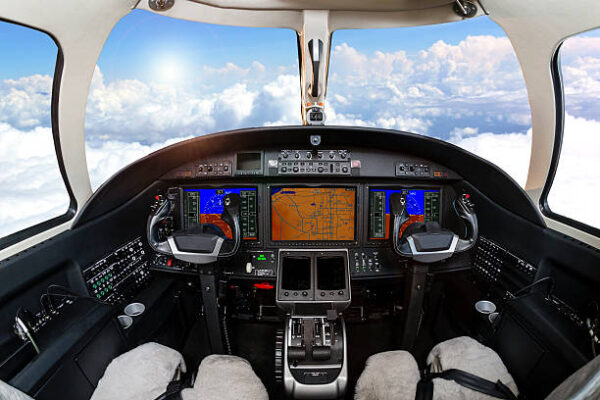
Safety is paramount in aviation, and AI is playing a crucial role in enhancing it. AI algorithms can analyze vast amounts of data in real-time, improving predictive maintenance and fault detection. With AI monitoring every component of a private aircraft, potential issues can be identified before they become critical, reducing the risk of accidents due to mechanical failures.
Furthermore, AI can help improve pilot training and decision-making. Flight simulators with AI-powered scenarios can mimic real-world challenges, allowing pilots to train in a variety of situations without risk. This helps prepare them for unexpected scenarios and improves overall flight safety.
ENHANCED EFFICIENCY
Private aviation clients are known for their high expectations regarding efficiency and convenience. AI can streamline various aspects of private aviation operations, making the experience more seamless.
- Aircraft Acquisition & Sales Research: The HMS Aviation, Inc. AI platform can search world wide for exact specifications on any aircraft to make finding the right aircraft immediately.
- Flight Planning: AI-driven flight planning systems consider weather conditions, air traffic, and other variables to optimize routes. This not only reduces fuel consumption but also minimizes travel time, ensuring that private aviation remains a time-efficient option.
- Maintenance Scheduling: AI can predict when an aircraft requires maintenance, ensuring minimal downtime. This predictive maintenance approach is cost-effective and ensures that private aircraft are always in excellent condition.
- Crew Management: AI helps in crew scheduling and management, optimizing work hours, and reducing fatigue risks. This not only improves efficiency but also contributes to flight safety.

PERSONALIZED SERVICES
Private aviation clients expect a high level of personalization, and AI is making it possible to deliver tailored services.
- Passenger Preferences: AI systems can store and analyze passenger preferences, from in-flight meal choices to entertainment options. This data enables a more personalized travel experience, making clients feel valued and catered to.
- Booking and Concierge Services: AI-driven chatbots and virtual concierges can handle booking requests, travel arrangements, and special requests efficiently. This minimizes the need for human intervention in routine tasks and frees up personnel for more complex and personalized services.
AI can help private aviation companies optimize their pricing strategies. By analyzing historical data, demand patterns, and market dynamics, AI can predict price fluctuations and guide operators in setting competitive prices. This benefits both operators and clients by ensuring better cost-efficiency.
ENVIRONMENTAL IMPACT
Private aviation is often criticized for its environmental footprint. AI can help mitigate this issue by optimizing routes to reduce fuel consumption and emissions. Moreover, AI-driven innovations in electric and hybrid propulsion technologies may eventually replace traditional fossil fuels, further reducing the industry’s environmental impact.

ENHANCED SECURITY
Security is a significant concern for private aviation, and AI plays a crucial role in improving it. Facial recognition, biometric authentication, and AI-powered surveillance systems enhance security at airports and during flights, ensuring the safety of both passengers and aircraft.
AI is set to revolutionize private aviation in numerous ways, from safety and efficiency enhancements to a more personalized passenger experience. The incorporation of AI technologies in private aviation will not only improve the overall quality of services but also contribute to a more sustainable and secure future for the industry. As AI continues to advance, private aviation will evolve to meet the demands of its discerning clientele while maintaining the highest standards of safety and efficiency.
The integration of Artificial Intelligence into the aviation industry is a testament to human ingenuity and innovation. From enhancing safety and optimizing flight operations to improving the passenger experience and air traffic management, AI is reshaping the future of aviation. As AI technology continues to evolve, we can expect even more remarkable advancements in this dynamic industry, making air travel safer, more efficient, and more enjoyable for everyone.
With over 25 years of experience in business aviation, Chuck Stumpf has been instrumental in building and leading sales organizations for some of the largest private jet companies.