



































Share this article
“Accountability” might be the most overused word at work. We build frameworks around it. We draw charts. We buy books that promise to fix it, full of metaphors like the “accountability ladder” (climb from making excuses to owning results) and “shifting the monkey” (passing a job you should own onto someone else’s back). Entire industries exist to solve it.
But most of the time, when a leader says “we have an accountability problem,” it’s not true. Here’s what actually happened. Someone broke a promise. The leader saw it. The leader said nothing. Then it happened again.
That’s not an accountability problem. That’s fear. Call it what it is. But fear of what? Fear of not being liked. Fear of the pushback. Fear of being the bad guy. You were afraid of one uncomfortable conversation, so you called it something corporate instead.
Think about the last time someone let you down. A deadline blown. A report full of errors. You felt the jolt. And then what did you do? If you’re like most people, nothing. “I’m too busy.” “Maybe they’re having a bad week.” “I’ll put it in their review in six months.”
You chose your own comfort. And in that moment, you taught your team that the standard doesn’t matter.
Why Silence Spreads
In 1982, two criminologists, James Q. Wilson and George Kelling, described something called the broken window theory. The idea is simple. One broken window left unfixed sends a message: nobody is in charge here. Nobody cares. And once that message goes out, more windows get broken.
Psychologist Philip Zimbardo tested it in 1969. He left a car with no license plates in the Bronx. People began stripping it within minutes. By the next day it was gutted. He left an identical car in a nice neighborhood in Palo Alto. It sat untouched for over a week. Then he walked over and smashed one window with a sledgehammer. Within hours, respectable neighbors had destroyed the rest.
One broken window changes what people believe is allowed.
Need a modern version? In December 2022, Southwest Airlines canceled more than 15,000 flights in ten days and lost over $1 billion. The government then hit the company with a record $140 million fine. The cause was not the winter storm. It was a crew scheduling system everyone knew was outdated. Flight attendants had been warning about it for a decade. The window was cracked in plain view for ten years, nobody fixed it, and one storm walked right through it.
The first broken window at work is small. Someone shows up late to a key meeting. A deadline slips and nobody mentions it. When you see it and stay quiet, you’re sending the Bronx signal. Everyone learns the rules aren’t real. More windows break. A year later you’re asking why nobody on this team takes ownership.
The Billion Dollar Version
When Alan Mulally took over Ford in 2006, the company was losing billions and close to running out of cash. Every week, his executives showed him charts. The charts were all green. Every project was “on track.” None of it was true, but nobody wanted to be the one to say so.
Then one week, an executive named Mark Fields showed a red chart. He admitted a product launch was in trouble. The room went silent. Everyone waited for the firing. Mulally clapped. He said, “Mark, that’s great visibility. Who can help Mark with this?”
That moment changed the culture. People learned that showing the problem was safe, and hiding it was the real risk. Soon the charts were honest, problems got solved while they were small, and Ford recovered without the bankruptcy that took down its competitors.
One round of applause. That’s what facing a problem instead of avoiding it looks like at the top.
Your Team Is Avoiding Too
Here’s the part leaders miss. The person “lacking accountability” is usually avoiding conflict as well. They avoid the hard internal fight of doing difficult work, so they put it off. And they avoid saying the three sentences that would save them: “I’m overwhelmed.” “I don’t understand this.” “I need help.”
Those sentences feel risky. Looking slow feels dangerous. So instead of a small, awkward conversation, they choose a large, quiet failure. Both sides are doing the same thing. Choosing momentary comfort over the truth.
I know what the other side of a real confrontation feels like. My scuba instructor once had to shake me, literally, to stop me from doing something that was about to hurt me underwater. It was not gentle. It was not comfortable. It saved me. Confrontation, done with someone’s good in mind, is not the opposite of care. It is care. Most people have just never felt it that way at work.
The Thirty Second Fix
The conversation you’re avoiding takes about thirty seconds. Four moves.
Facts. Just what you saw, no verdict attached: “I noticed the report didn’t go out Friday.” No “you always.” No guessing at motives. You haven’t heard their side yet, so open with what you actually know, not what you’ve decided.
Ask. Then ask, and actually wait: “What happened?” Not rhetorical. Real. Maybe the report didn’t go out because finance rewrote the forecast at 4 p.m. Friday.
Commit. Land on the standard: “When I ask for something, I need to know I can count on it. What do you need to make sure this goes out next time?”
Expect. End with a date, not a feeling: “When should I expect it?” The conversation doesn’t close on the problem. It closes on the promise.
Have it the day the window breaks, not six months later in a review.
The Real Definition
Here’s a better definition than any framework: Accountability is the willingness to have the uncomfortable conversation.
The word confront comes from Latin roots meaning “face to face.” That’s all it is. Coming face to face with the problem, with the person, in the same moment. Look at the four moves again. Facts. Ask. Commit. Expect. The method has been hiding inside the word this entire time.
You don’t need a framework. You need to face it.
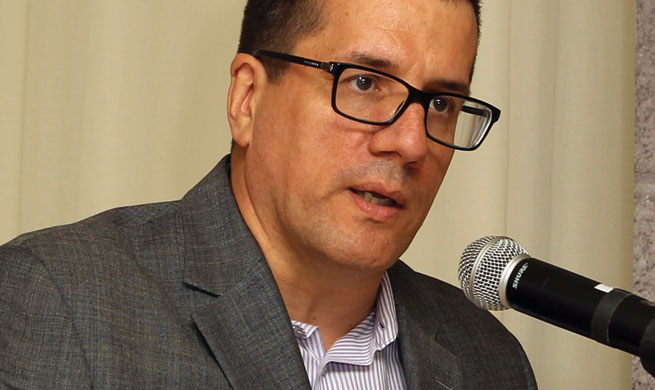
David Smailes is an executive coach with CxO Coaching, helping senior leaders drive growth through clear strategy and focused execution. He’s led global teams at Fortune 500s and startups and speaks on AI’s role in leadership and learning. He holds advanced degrees from Harvard and Vanderbilt.