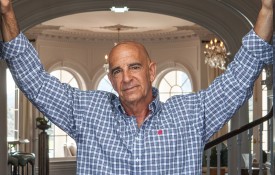







































Entrepreneurship almost never happens in a straight line. Every founder has pages of stories about things that went right, then wrong, or things that took off, then fell flat. Entrepreneurship isn’t something that happens overnight; it challenges innovators to put in the effort, work through the rejection, and create something that lasts.
Al Goldstein’s path consisted of moving to a new country at age 8, working tirelessly as a young investment banker, checking off a successful fintech exit, standing up a real estate business with thousands of units, and now expanding Avant, a financial technology company designed to serve millions of middle-income Americans.
Goldstein has spent much of his career building businesses at the intersection of technology, finance, and customer needs. With Avant, he is offering access to financial products for middle-income Americans, building on a vision that has remained consistent since the company’s founding in 2012.
“That vision really hasn’t changed at all,” Goldstein says. “Let’s build a business that will stand the test of time, that will outlive us.”
An Example of What’s Possible
Born in Uzbekistan when it was still part of the Soviet Union, Goldstein and his family immigrated to Chicago when he was just 8 years old. It was watching his parents leave behind everything—their culture, language, loved ones, and familiar economic opportunities—and still find their “sea legs” that showed him what determined people are capable of.
“I think it just changes your mindset on what’s possible,” he says.
“A lot of entrepreneurship is understanding the risks, actually taking some risks, and hopefully getting rewarded for them occasionally.”
For Goldstein, overcoming your own fear of a situation is the first step. “If you can do that, the results that exist on the other side are unbelievable.”
His own parents worked through their fear of the unknown. They persevered, kept moving forward, and crafted a life for their children that shielded them from some of the hardship. “I grew up living the American dream as a kid that had no idea,” Goldstein says.
Much like his peers, Goldstein poured himself into sports. He wrestled and played football and credits his time as an athlete for his ability to stay competitive, fight to win, and, most importantly, get comfortable with losing. “You literally get your butt kicked in wrestling,” he says with a laugh. “This idea of dealing with failure—you just have to embrace that in a way.”
14 Months or 14 Minutes?
In college, Goldstein studied finance and mathematics before starting his career as an investment banker at Deutsche Bank in New York in 2002. That industry was an important part of his journey—it gave him a financial foundation that he still relies on—but the demanding hours and conventional career path didn’t hold his attention for long.
“I learned a ton but worked insane hours,” he says. “I lasted about 14 months.” To this day, when Goldstein brings up his 14-month tenure, his wife teases him with, “14 months?! You were there for 14 minutes.”
Hungry for something else, Goldstein began exploring real estate investments with a mentor and early partner in his first entrepreneurial venture. At first, the idea was to invest in real estate, but his mentor, David Shorr, pushed for something more, saying, “I want to put you in a position to benefit from your own hard work.”
With that, Goldstein, Shorr, and Goldstein’s brother launched the business that would eventually become part of Enova, now a publicly traded financial technology company.
Today, AI is transforming financial services, but Goldstein and his team were exploring related technologies years before AI became a mainstream business priority. “We were really early in investing in data and playing around with neural networks, which are the foundation for what we call AI today,” he says.
The business grew quickly, reached profitability, and was acquired in 2006. Goldstein and his partners were fully out of the business within five years. The experience gave Goldstein confidence in his ability to identify opportunities and operationalize them, but it also made it seem really easy to build and scale a business.
“I’ve learned since building companies is really hard,” he says, “and everything takes at least 10 years.”
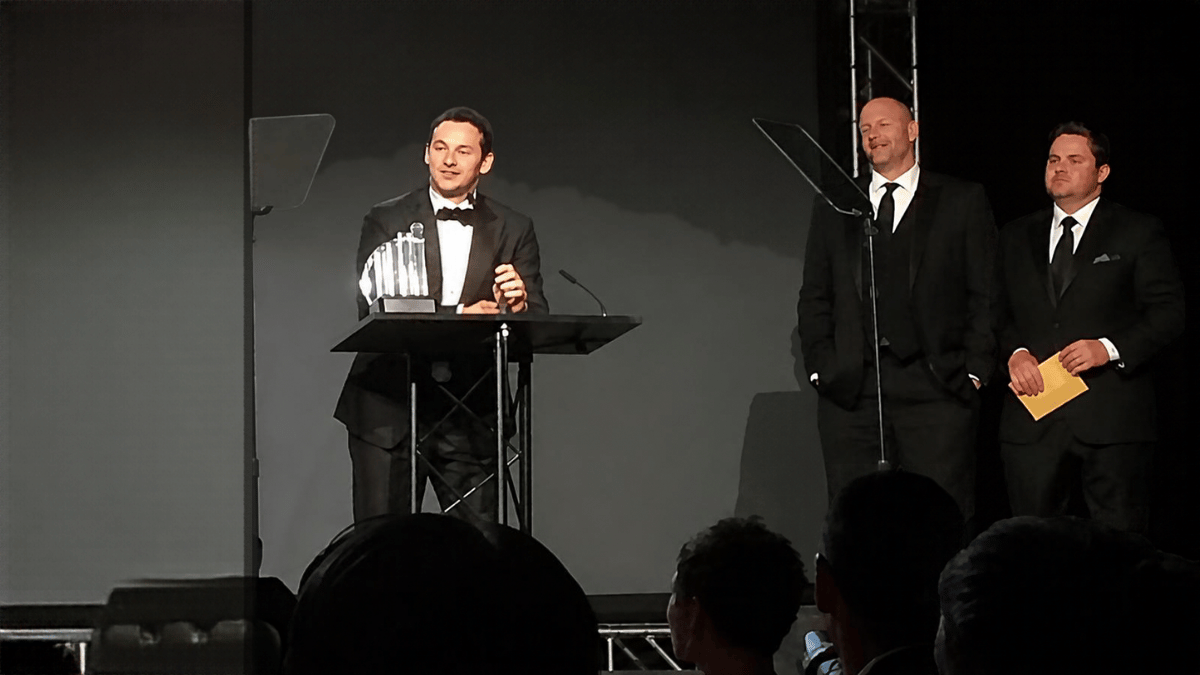
Al Goldstein Winning the EY Entrepreneur of the Year Award in June 2015
Building a Business and Changing Diapers
When his oldest child was just 6 months old, Goldstein and his team started Avant. His wife, a corporate attorney, stepped in to support the operation from a legal perspective, and alongside their team, they raised their children and built a business. “It was total insanity, but it was super fun. I’d do it again,” Goldstein says. “I’m not sure she would, though.”
It wasn’t always fun and exciting. In the early years of fintech, the industry experienced significant volatility. New companies were facing regulatory challenges, financial institutions weren’t really sure how to collaborate with these new businesses, and investors were feeling skittish about going all in.
In 2016, Goldstein experienced something he never thought he would as a founder: He needed to shrink his own operation. “Both in people and surface area, we had to cut back,” he says. For a founder accustomed to growth, the experience was humbling. It forced him to confront a side of entrepreneurship that his early successes hadn’t prepared him for.
Turning an Opportunity into a New Business
Avant started as a platform enabling access to credit for middle-income consumers, but one significant development emerged from an unexpected source: its banking relationships.
While partnering with banks, Goldstein and his team discovered that some institutions were less interested in sending customers to Avant than in accessing the technology Avant had developed. Banks were being pressured to modernize their digital offerings and create a better user experience, and Avant’s capabilities offered a potential solution.
“That was the lightbulb moment where we’re like: Huh, we’re not competing for their customers anyway. Can we actually partner to enable them?” The technology was eventually commercialized through Amount, a separate company spun out of Avant in 2020 and later sold to FIS.
Building Beyond the Founder
Goldstein’s ambitions for Avant extend far beyond new products or creative partnerships; the company has applied for a bank charter, meaning it’s looking for approval from the government to operate as a bank, not just a fintech company.
“There’s a joke that all banks want to be fintechs, and all fintechs want to be banks,” Goldstein says. “We believe we’re now mature enough to actually be a bank ourselves.” Operating as a bank would allow Avant to provide a more seamless experience, use capital more efficiently, and pass those wins down to the customer.
Becoming a bank is just one piece of the future vision. Goldstein wants Avant to be a partner for Americans at different stages of their financial lives. He wants to create an organization with the leadership, infrastructure, and vision to keep evolving long after its founders are no longer involved in its day-to-day operations. With a growing suite of products designed to support customers through different stages of their financial lives, Avant can become something that lasts—just like Goldstein always hoped.
Top: Avant Co-Founders Paul Zhang, Al Goldstein, and John Sun in Avant’s first office at 640 N LaSalle