

































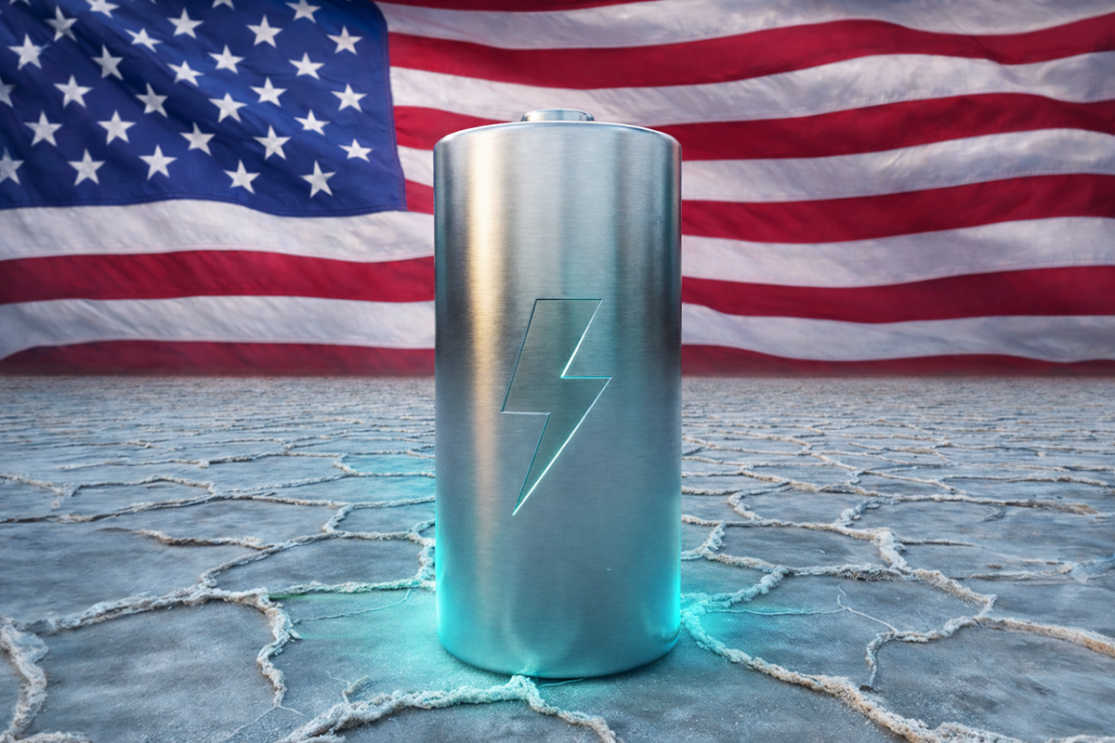
Today, global lithium production runs roughly 1.2 million tons per year. Analysts project demand will grow 5X by 2040 and the world isn’t producing enough. Morgan Stanley has flagged an 80,000-ton shortage emerging in the near term as demand from EV manufacturers accelerates faster than new supply can come online.
Why? As electric vehicles transition from early-adopter curiosity to mainstream product, as grid-scale energy storage becomes a national infrastructure priority, and as AI data centers drive unprecedented electricity demand, lithium has quietly become one of the most strategically important materials in the world.
It’s a gap that Texas-based EnergyX is now positioned to fill.
The Demand Picture
For years, the U.S. was content to sit downstream from China’s supply chain (which controls approximately 65-70% of global lithium processing), importing refined material for batteries assembled by companies with strong ties to Chinese producers. Geopolitical tensions, trade policy volatility, and pandemic-era supply disruptions changed that calculus, pushing domestic sourcing to the top of the agenda for American automakers, the Department of Defense, and policymakers alike. General Motors, one of the most consequential players in that shift, has already placed its bet, leading a $50M funding round in EnergyX and securing offtake rights for its lithium supply.
They’re among the auto manufacturers shifting production toward electric vehicles. Estimates suggest the automotive industry will need 680 million pounds of lithium to meet global 2030 EV sale projections. A figure that exceeds the entire global supply today and doesn’t include the lithium needed to support grid storage, AI data centers, defense, or consumer electronics. The supply math is already putting upward pressure on lithium prices.
Analysts at multiple banks have projected prices potentially reaching $28,000 per ton by the late 2020s, compared to levels closer to $21,000 today.
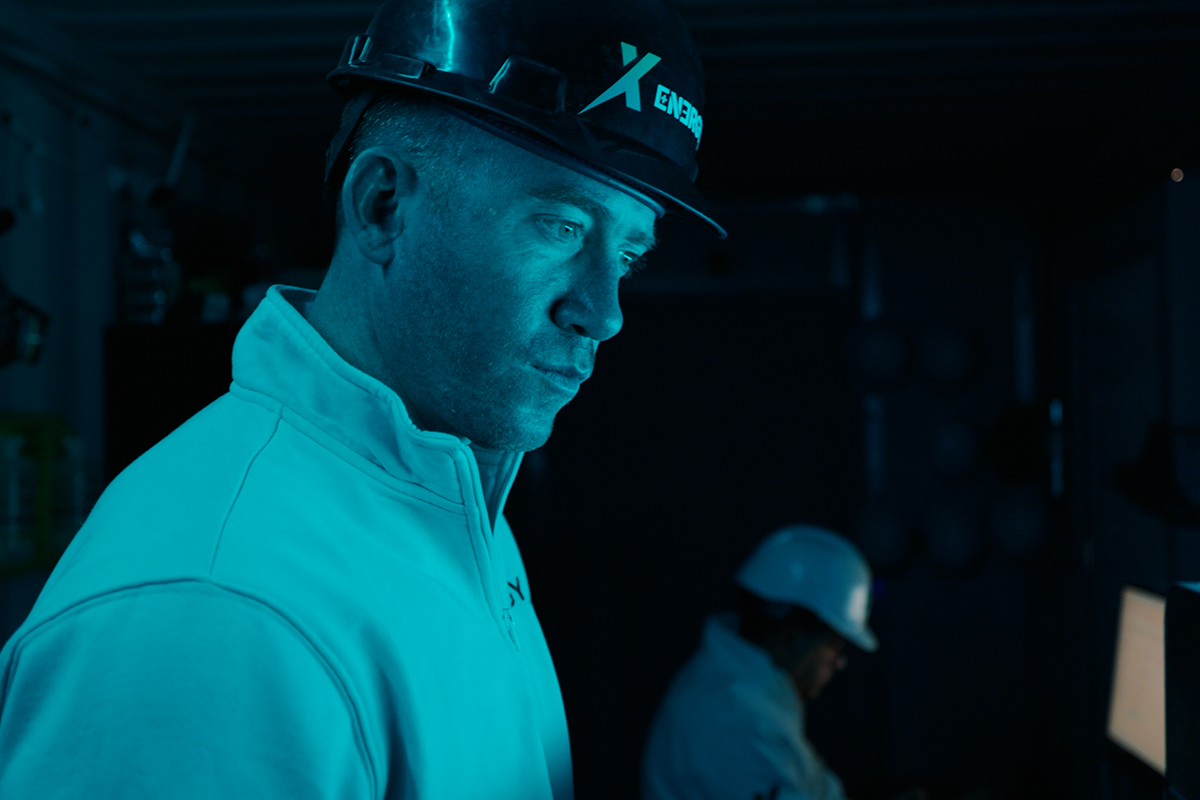
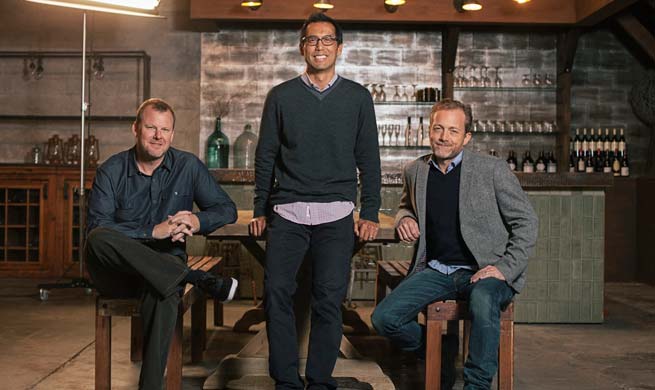
Teague Egan, Founder and CEO of EnergyX, on-site at the Project Lonestar™ facility.
A New Class of Domestic Players
Against this backdrop, EnergyX is among a wave of American companies that have emerged to develop domestic lithium resources; some targeting the Smackover Formation running through Texas, Arkansas, and Louisiana; others focused on the geothermal brines of California’s Salton Sea; and still others partnering with South American governments to develop resources in Chile and Argentina.
But what distinguishes EnergyX from other up-and-coming lithium players is its combination of resources and proprietary recovery technology.
Conventional lithium recovery from brine relies on evaporation ponds that can take 18 months or longer to process material at recovery rates of 30–40%. EnergyX’s GET-Lit™ direct lithium extraction (DLE) platform, backed by more than 120 patents, completes the same process in days at recovery rates above 90%, extracting up to three times more lithium per unit of brine than legacy methods.
The company holds the unusual distinction of having developed all three classes of DLE technology (adsorbents, extractants, and membranes), giving it flexibility across different brine chemistries.
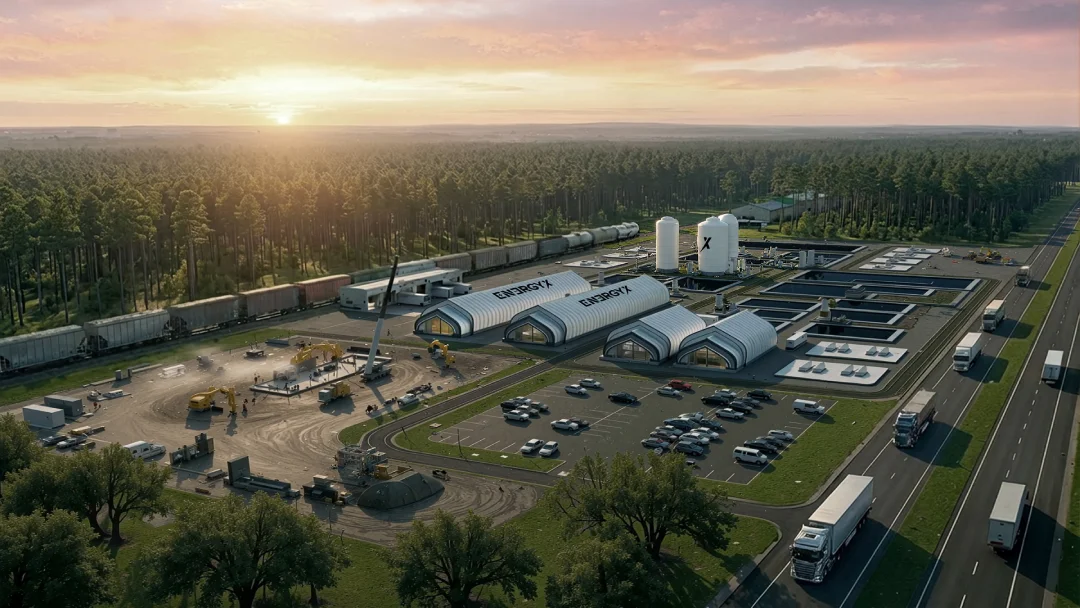
Located in the Smackover region (Ark-La-Tex), Project Lonestar™ is projected to become one of the largest lithium production facilities in the country.
The Asset Base & Investor Interest
Beyond the technology, EnergyX has assembled a resource position that few domestic competitors can match. The company holds rights to up to 13 million tons of untapped lithium across North and South America. That includes 100,000+ acres of concessions in Chile’s Antofagasta region, where an independent feasibility study validated one of the lowest-cost production pathways in the industry. In the U.S., the company holds approximately 50,000 acres across Arkansas and Texas, one of the most lithium-rich brine formations in North America. And now, they have announced plans for a second U.S. facility on a 2.4-million-ton resource outside Ogden, Utah.
Eni, the Italian energy major with roughly $100 billion in annual revenues, and POSCO, one of the world’s leading battery materials producers, have also made strategic investments. The U.S. Department of Energy awarded the company a $5 million grant for geothermal brine extraction work. The company projects a potential $1.1 billion annual revenue opportunity at forward market prices in Chile alone.
The domestic lithium industry is no longer a thesis. The gap between concept and commercial production is closing fast, and the companies that secure resources, technology, and institutional backing at this stage tend to be the ones that define the market.
EnergyX is currently offering equity participation to retail investors at $13.00 per share until July 16. Learn more about this opportunity.
Click here to review the most recent audited financial information.
Energy Exploration Technologies, Inc. (“EnergyX”) has engaged C- Suites Quarterly to publish this communication in connection with EnergyX’s ongoing Regulation A offering. C- Suites Quarterly has been paid in cash and may receive additional compensation. C- Suites Quarterly and/or its affiliates do not currently hold securities of EnergyX.
This compensation and any current or future ownership interest could create a conflict of interest. Please consider this disclosure alongside EnergyX’s offering materials. EnergyX’s Regulation A offering has been qualified by the SEC. Offers and sales may be made only by means of the qualified offering circular. Before investing, carefully review the offering circular, including the risk factors. The offering circular is available at invest.energyx.com/.
Comparisons to other companies are for informational purposes only and should not imply similar results. Past performance is not indicative of future results. Market shortfall are forward‑looking estimates and are subject to substantial uncertainty.