




































I’ve spent a lot of my career in fintech, and one thing carries over cleanly: the best financial infrastructure is the kind nobody thinks about. Nobody wants to think about their payment rail. They just want the payment to work. That’s the same standard I hold hospitality technology to now. Mews started as hotel software and has grown into the operating system a hotel runs on, payments included: it processes the transactions behind check-in, checkout, and everything a guest buys in between, for thousands of properties. When that payment fails silently or takes too long, a guest notices immediately. When it works, nobody thinks about it at all. That’s the test our team applies to every feature we build now: not “does it feel advanced,” but “would a guest notice if we turned it off?”
We recently asked over 3,000 travelers across the US, UK and Europe how they feel about AI showing up in their hotel stay, and the answer is clear.
89% want AI either working invisibly behind the scenes or blended into a stay that’s still led by a person. Only a small minority want AI running the show up front. People don’t dislike AI. They dislike being made to notice it.
That distinction matters far beyond hotels, and most companies are building AI the opposite way right now: a new tool for every task, each with its own window, its own prompt box, its own output that somebody has to read and approve before anything happens. That’s not AI disappearing into the work. That’s AI adding a job on top of the job. A Boston Consulting Group study published in Harvard Business Review this March found that employees using up to three AI tools reported higher productivity, while productivity dropped for those using four or more. Researchers called the resulting fatigue “AI brain fry.”
It shows up in the business results, too. Deloitte’s 2026 State of AI in the Enterprise found only 34% of companies using AI to deeply transform the business, with 30% redesigning key processes around it and the remaining 37% applying it at the surface with little real change. McKinsey’s June 2025 work on agentic AI found close to eight in ten companies had deployed generative AI in some form, while roughly the same share reported no material earnings impact, and the higher-value, function-specific use cases were mostly still stuck in pilot.
Let AI handle the logistics, and leave the human part to people.
When we asked travelers what they liked about AI, the top answers were practical: availability around the clock (53%), faster responses (43%), and easier translations (39%). When we asked what worried them, the answers were personal: losing the human touch (49%), what happens to their data (44%), AI simply getting it wrong (38%). What travelers value in technology is logistics: speed, availability, translation. What they worry about losing is human interaction. That’s a clear division of labor, and it holds true at work too. Let AI take the transactional tasks, and keep people on the moments that call for judgment and care. The other two worries, data and accuracy, come down to control.
Two of the better product decisions of the last few years understood this instinctively. Apple built Apple Intelligence into the operating system itself, so it works quietly across apps and draws on your own context instead of living in one more window you have to remember to open. Delta’s Touchless ID lets opted-in travelers use facial matching at bag drop and security instead of pulling out a physical ID, cutting bag drop time by up to 75% and security time by up to 60% for enrolled customers versus standard TSA PreCheck. Both took a step out of something people already had to do. Neither made the technology the point. And both left the choice with the person using it, which is exactly where our data says trust comes from: 57% of travelers told us they’d rather stay in control than have AI make decisions for them, and 62% said they’d use more AI if its data practices were clearly explained and controllable, a number that held up even among people who came into the survey skeptical of AI generally.
Stop measuring adoption, and start measuring what it removes.
A product is working when people stop thinking about it. That’s what happened to payments over the last fifteen years: checkout faded into the background, and it got there by removing steps, not by adding features. Most companies still judge their AI rollout by adoption, credits used, prompts, or time saved on one task. None of that tells you whether your people have more time or attention for each other, which is where our survey respondents kept saying they wanted human interaction.
Here’s a number that gets closer to the real test. In a separate survey of hoteliers, we found that guest-facing work, the part of the job only a person can do, takes up just 24% of the average work week. The rest is systems, reporting, reconciliation, and admin. If AI is working the way our travelers want it to, that 24% should go up, not down. That’s the actual metric: not how many tools you’ve deployed or how many people are using them, but whether the share of the week your team spends on the work only they can do is growing.
Three things are worth tracking instead of adoption. First, where the reclaimed time actually goes. Time saved on a task doesn’t count unless someone can show what it was spent on instead, not estimated, logged. Freed-up hours that quietly get absorbed into more reporting don’t count as a win, even if the AI performed well. Second, how many tools your team has to personally operate to get through a task, versus how many just do the work without being asked. Every tool that needs a person driving it counts against the four-tool threshold the HBR researchers found, regardless of how good it is. Third, and hardest to fake, is the trend in guest-facing (or customer-facing, or team-facing) time over a quarter, not a single before-and-after snapshot, since the real test of an AI rollout is whether that number keeps climbing after the novelty wears off.
If you’re rolling out the next AI tool at your company, ask two questions before you do. Which tasks should it take off your team’s plate, so that the 24% grows? And will your team have to operate this tool, or will it quietly do the work for them?
The 89% of travelers who told us they want AI blended in or working behind the scenes were describing more than just a preference about hotels; they were telling us what they want out of all the technology in their lives, including the ones waiting for them at their own desk on Monday. The companies that get the most out of AI will be the ones disciplined enough to build it that way: counting what it removes, protecting people’s attention, and staying quiet enough that, when it’s working, nobody’s talking about the software at all.
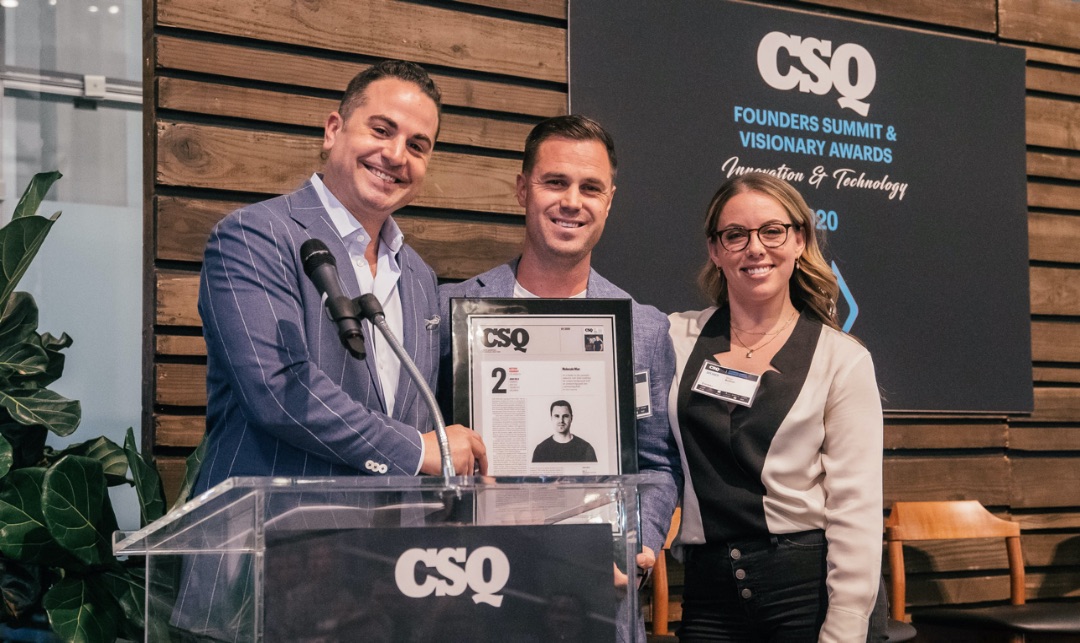
Michael Coscetta is President of Mews, overseeing the company’s global go-to-market, operations, and fintech efforts. Michael brings extensive growth experience to the business, including from his previous role as Chief Revenue Officer at Paxos, a global blockchain infrastructure company. Michael has also held roles at Compass, where he was responsible for sales, development and growth, scaling annual revenue to $2b+ and preparing the company for IPO, and Square, now Block (NYSE: SQ), where he helped the company grow from a $3b new IPO to a $50b global business.