
































Harris Beber has spent his career following one through line: understanding what motivates people and drives behavior. From selling flowers at 1-800-Flowers right after the dot-com bust, to diapers at Amazon, photo books at Shutterfly, and on through Vimeo, Waze, and Google Workspace, Beber has built a reputation as a marketer who translates deep customer empathy into bold, measurable strategy.
In mid-2025, he stepped into a newly created CMO role at Monday.com, the first true CMO in the 14-year-old company’s history, arriving precisely as artificial intelligence began reshaping not just the product, but the entire discipline of marketing itself.
The Marketer’s Collective sat down with Beber to talk about what it means to market an AI-powered work management platform in real time, how Monday’s llama mascot became one of B2B’s most recognizable characters, and why he refuses to accept the premise of “brand versus performance.”
YOU’VE HAD AN UNCONVENTIONAL PATH: FLOWERS, DIAPERS, PHOTO BOOKS, AND NOW ENTERPRISE SOFTWARE. WHAT IS THE THREAD THAT CONNECTS IT ALL, AND WHAT DREW YOU TO MONDAY.COM?
Beber: It’s been a winding journey, and I think those are the best ones. My first job out of school was at 1-800-Flowers right after the dot-com bust, so I joke that I went from selling flowers and gift baskets, to diapers at Amazon, to photo books, and now enterprise software. Not an expected arc. But the unifying thread has always been understanding customers, the values that drive their behaviors, and tying those two things together. That’s how I moved from e-commerce all the way up to tech.
As for Monday, I wasn’t looking to leave Google Workspace. The opportunity fell in my lap, and as I spoke with the leadership team, what resonated was the chance to transform how people work. Monday has always sat at the intersection of ambition and execution: how do you get more done, faster? And now, with AI woven naturally into that process, the ability to accelerate time-to-impact is extraordinary.
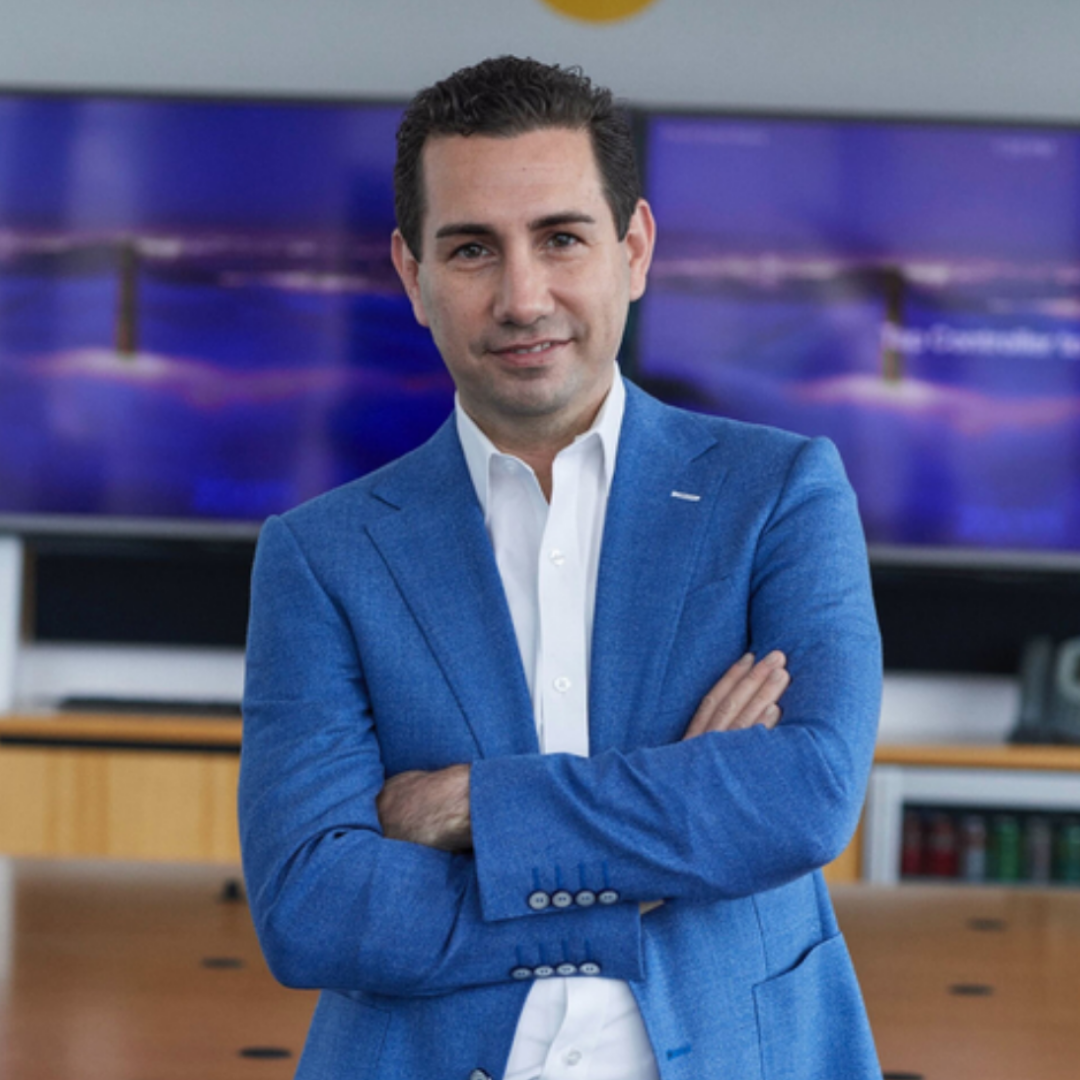
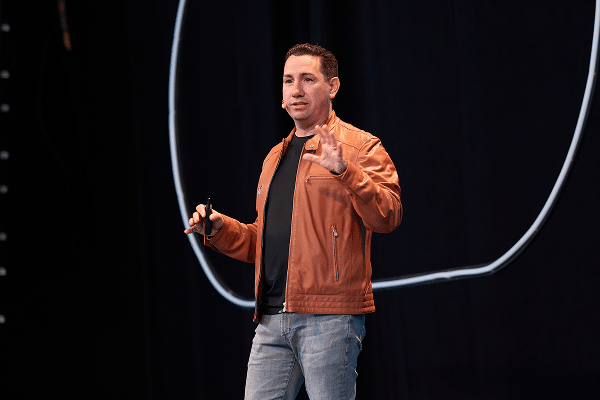
Harris Beber joined Monday.com as its first Chief Marketing Officer in 2025, bringing leadership experience from Google, Waze, Vimeo, Amazon, and Shutterfly
YOU JOINED MONDAY AS ITS FIRST-EVER TRUE CMO. WHAT DID YOU WALK INTO, AND HOW DID YOU APPROACH STRUCTURING THE TEAM?
Beber: It was an incredible team that was working incredibly hard, but without singular, aligned focus. My first step wasn’t to change anything. I listened and learned what was working. The company was growing more than 25 percent and was highly profitable, so it wasn’t broken. We just had to evolve as we moved upmarket.
We organized around core competencies: a growth marketing team that owns paid media, a centralized brand and creative function (which used to be separate), product marketing, the website lifecycle, and comms and PR. We also built out an enterprise marketing team from scratch over the last 18 months, because the marketing you do for large enterprise sales is completely different from a self-serve motion. Account-based marketing, demand gen, events, partnerships, none of that existed before. Today, the team is over 200 people.
AI IS CENTRAL TO MONDAY’S PRODUCT STORY. CAN YOU BREAK DOWN, IN PLAIN TERMS, WHAT AN AI AGENT ACTUALLY IS AND HOW MONDAY IS USING THEM?
Beber: I think of AI 1.0 as a single task: make this image, write this document, do this research. An agent is multi-step. It knows what you want it to do and executes a sequence of actions on your behalf, intelligently. Take recruiting: tell the agent to take 100 resumes, sort them by relevance to the job description, prioritize based on qualifications, then send outbound outreach to set up first appointments. It does all of that in one flow and it learns as it goes, getting to know the context of your business over time.
At Monday, we launched agentic capabilities with agents that can do everything from qualifying sales leads and booking appointments, to resolving service tickets without a human in the loop. The idea is to scale the impact of one person with a team of AI agents at their disposal.
MONDAY SHIPS PRODUCT FASTER THAN MOST COMPANIES CAN RUN CAMPAIGNS. HOW DO YOU KEEP MARKETING IN STEP WITH AN INNOVATION CYCLE THAT NEVER SLOWS DOWN?
Beber: It is the biggest challenge and Monday moves faster than any company I’ve ever been at. I joke that it’s literally the first company where product ships faster than marketing can keep up. I’m used to the normal cadence: we’re launching in May, marketing plans the campaign, and two weeks before launch they say, ‘Just kidding, it’s August.’ Here, features are shipping so quickly that our customers often aren’t aware of the full value we’re delivering.
So a lot of our work is closing that adoption gap, customer testimonials, what we call master classes, surfacing new capabilities inside the product itself. The technology is exponentially more capable than 99 percent of people even need, and the biggest constraint is human: people don’t even think to ask AI to do the things it’s fully capable of. My best advice is simply: try it. The worst it can say is no, and it says no a lot less than it used to.
MONDAY.COM STARTED AS A WORK MANAGEMENT PLATFORM, BUT THE PRODUCT HAS EXPANDED SIGNIFICANTLY. HOW DO YOU EXPLAIN WHAT MONDAY DOES TO SOMEONE WHO HAS NEVER HEARD OF IT?
Beber: Work management doesn’t mean anything to anyone, I’ll be the first to admit that. Think of it as organizing your work and the people you work with so you get more done more efficiently. A marketing team might use it to manage an entire production: resources, timelines, every step of a campaign from brief to launch. An IT team might manage a full development cycle on it. The reason people love it is that it’s both easy to use and fully customizable. Most of the alternatives are either too rigid or end up being a spreadsheet, which is cumbersome and doesn’t update dynamically.
Monday was built on what we call ‘Building Blocks’, a flexible structure you can configure for almost any use case. In fact, our CRM product was born because users were already running CRM workflows inside our work management platform. We saw the behavior, formalized it, and shipped it as a dedicated product. That’s how bottoms-up, user-driven growth actually works.
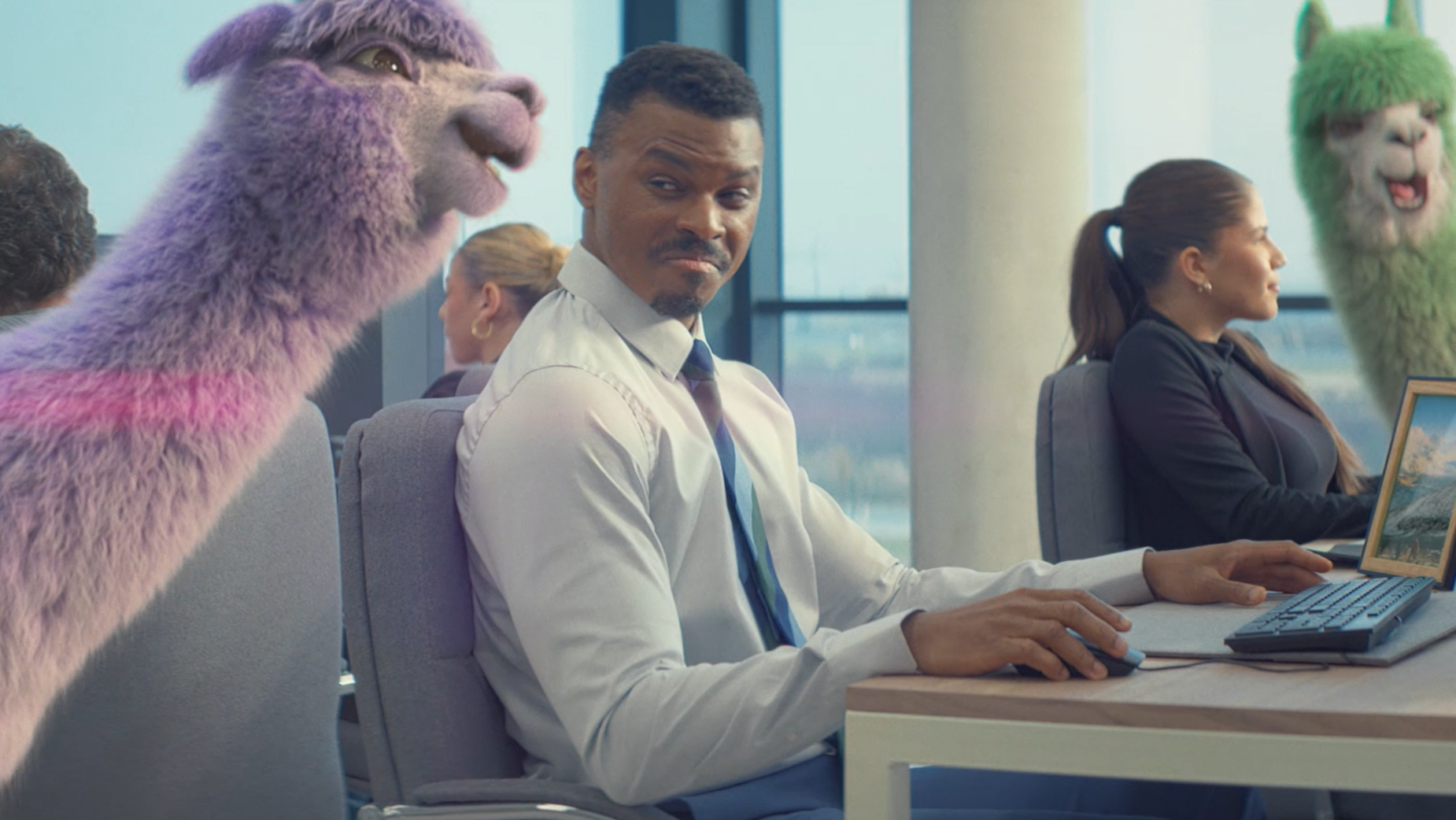
Born from an internal hackathon, the Monday.com llama has become one of the most recognizable and beloved mascots in B2B technology
THE MONDAY.COM LLAMA HAS BECOME ONE OF THE MOST BELOVED MASCOTS IN B2B TECH. WHERE DID IT COME FROM, AND HOW DO YOU THINK ABOUT ITS ROLE IN THE BRAND?
Beber: It started at a hackathon. No one set out to create a mascot, someone just asked, ‘How do we make the product more interactive?’ The idea was a llama farm: as you complete tasks, you build and tend your farm. The CEO loved it. The dopamine hit of seeing your llama farm grow turns something as mundane as a to-do list into something you actually want to engage with.
That is the ethos of the brand. Monday started as the most dreaded day of the work week, and the mission has always been to make it the most looked-forward-to. We believe work doesn’t have to be boring. A lot of B2B software is very serious and very bland. We are not that. The llama gives us permission to be lighthearted, and that comes through not only in the product, confetti when you click ‘done,’ green checkmarks, moments of delight, but in our marketing as well.
YOU’VE SAID YOU DON’T BELIEVE IN B2B MARKETING AS A SEPARATE DISCIPLINE. WHAT DO YOU MEAN BY THAT?
Beber: We’re all humans. The same things that work in consumer marketing work in B2B, because you’re talking to the same people, just in a different context. Ultimately, we have a product that offers value, and marketing’s job is to find the right audience and demonstrate that value in compelling ways that break through. That’s a simple formula. It is very hard to execute. And the reason I think we win is because we make our product enjoyable, easy to use, and fun and that shows up in our marketing.
HOW DO YOU THINK ABOUT THE BALANCE BETWEEN BRAND AND PERFORMANCE MARKETING WHEN YOU’RE ACCOUNTABLE FOR BOTH?
Beber: I don’t like the premise of brand versus performance, it’s all performance marketing. The question is: what results are you trying to deliver? The way I think about it is capturing demand versus creating demand. Capturing demand, search, for example, is the most efficient channel, because people are already looking for what you offer. But it’s finite. If 100,000 people are searching for project management tools, the most you can reach is 100,000. We want to grow far beyond that.
So how do you create awareness and demand in ways that are measurable and scalable? That’s the brand work. And we look at the ROI combined, not one or the other, because they work together. The right mix is what delivers impact that is both efficient and scalable.
WALK US THROUGH YOUR PARTNERSHIP PHILOSOPHY. YOU RECENTLY ANNOUNCED A MAJOR PARTNERSHIP WITH THE BONDS FLYING ROOS SAILGP TEAM. HOW DOES MONDAY THINK ABOUT WHO TO PARTNER WITH?
Beber: Three things: attention, reach, and value. You need all three. Will the partnership capture attention? Is the audience broad enough that you’re reaching people you care about? And can you deliver authentic value, not just say you’re a great product, but actually show it?
SailGP is a perfect example of all three coming together. The league was already organically using Monday to run its operations before we ever spoke. So we had a real use case to showcase, show, don’t tell. Ryan Reynolds and Hugh Jackman, as owners of the Bonds Flying Roos team, bring genuine attention and reach. They’re authentic, they’re funny, and they align with our brand values. And we can tell the story of how a global racing team uses Monday to manage everything from race logistics to brand and hospitality operations, that is the value. It’s the trifecta.
And for anyone wondering how these deals happen: it started with a cold LinkedIn message and the right timing.
HOW ARE YOU THINKING ABOUT CREATOR AND INFLUENCER STRATEGY FOR A B2B BRAND LIKE MONDAY?
Beber: You cannot buy attention on social platforms, not in the traditional sense. The most beautifully designed ads often perform the worst on the algorithm, because TikTok, Instagram, and Facebook trade on engagement. If your content makes people tune out, the platform won’t even let you spend against it.
What works is content that feels native to the platform, influencer-style, UGC-style, or genuinely creative and a little unexpected. We look for partners in two ways: subject matter experts in the corporate and marketing space (our CMO thought leadership program on LinkedIn is a good example), and creators whose demographics match the audiences and personas we’re going after. And we have a lot of fun with UGC-style content that we produce ourselves, mock influencer formats that deliver the product value in a format the platform rewards.
WHAT DO YOU THINK MARKETING TEAMS WILL LOOK LIKE IN FIVE YEARS, AND WHICH FUNCTIONS WILL AI RESHAPE MOST?
Beber: The better question is: what won’t AI reshape? It’s going to touch everything. Human creativity and taste will remain hard to replicate, if you give me a set of paintbrushes, I’m not going to paint anything beautiful, but a talented artist will. AI amplifies the skills you already have.
What’s already changing dramatically is the mechanics of marketing: ad platforms are moving away from specific targeting and keywords, and toward AI-optimized systems that need many creative variations to work effectively. Producing a thousand video variations using traditional methods is impossible. AI makes it feasible. Same with landing pages, media optimization, and buying decisions, the speed at which you have to move is simply too fast for humans to manage alone. You need AI in the loop. The best marketers will be the ones who embrace it as a tool to scale their own unique thinking.
IF YOU COULD SHARE A MEAL WITH ANY BRAND LEADER, WHO WOULD IT BE AND WHAT ONE QUESTION WOULD YOU ASK THEM?
Beber: Nick Tran. I know him personally, but I would love to sit down and ask how he does it. He was the first global marketing leader at TikTok, he was the one who caught the Ocean Spray trend and turned it into a partnership in 24 hours. He has a finger on the pulse of culture in a way that is almost impossible to explain. I’m a good marketer, but I would never describe myself as someone who truly understands culture the way Nick does. He’s always on it, always ahead of it, and his perspective is entirely his own. My question would be simple: How do you actually stay that close to the ground?
The Marketer’s Collective connects leading marketers to inspire collaboration, ignite innovation, and drive strategic partnerships. Each month, a virtual event brings together a diverse slate of C-suite speakers from Fortune 500 brands, offering valuable insights and networking opportunities. For more information visit: themarketerscollective.com