



































Share this article
For many businesses, cash management is treated as a relatively straightforward task: keep enough money available to cover expenses, earn a return on what is not immediately needed, and make sure funds are accessible when the business needs them.
But as companies grow, their financial decisions become more complex. Cash may be spread across multiple accounts, expenses may fluctuate, and revenue may arrive on a different schedule from payroll or vendor payments. For businesses operating internationally, currency movements add another layer of uncertainty.
These challenges have traditionally been addressed by dedicated treasury teams at large corporations. For businesses with tax bills, major expenses, partner draws, or other outflows in non-USD currencies, they usually simply expose their cash flow to large volatility swings in foreign exchange markets.
If your business is not holding cash in the same currency as your expected outflows, your business is unwittingly taking large bets on an ever more volatile forex market.
Decoupling Treasury from Banking
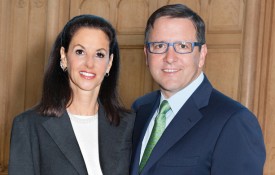
After building Gatsby, a consumer investing platform that was acquired by eToro in 2022, Belanger-Saleh and Myers turned their attention to a different part of the financial system. They saw an opportunity to bring greater sophistication to the way businesses manage their cash without the friction of switching banks.
Waldo is designed to help businesses put excess cash to work while maintaining the liquidity they need to operate. Rather than requiring customers to navigate a collection of financial products and make every decision independently, the platform combines portfolio management with AI-powered guidance.
The objective is to make treasury decisions easier to understand and manage. Businesses have different operating cycles, spending commitments, and tolerance for risk. A company preparing for a major hiring push has different cash requirements from one accumulating reserves for a future acquisition. A useful treasury strategy needs to account for those differences.
AI can help bridge the gap between financial complexity and practical decision-making by making it easier to understand available strategies, evaluate tradeoffs, and connect treasury decisions to the company’s broader objectives.
For Waldo, this is not simply a question of generating yield. It is about helping businesses make more informed decisions about their financial resources.
Looking Beyond Idle Cash
The opportunity extends beyond the interest a company can earn on its cash balance.
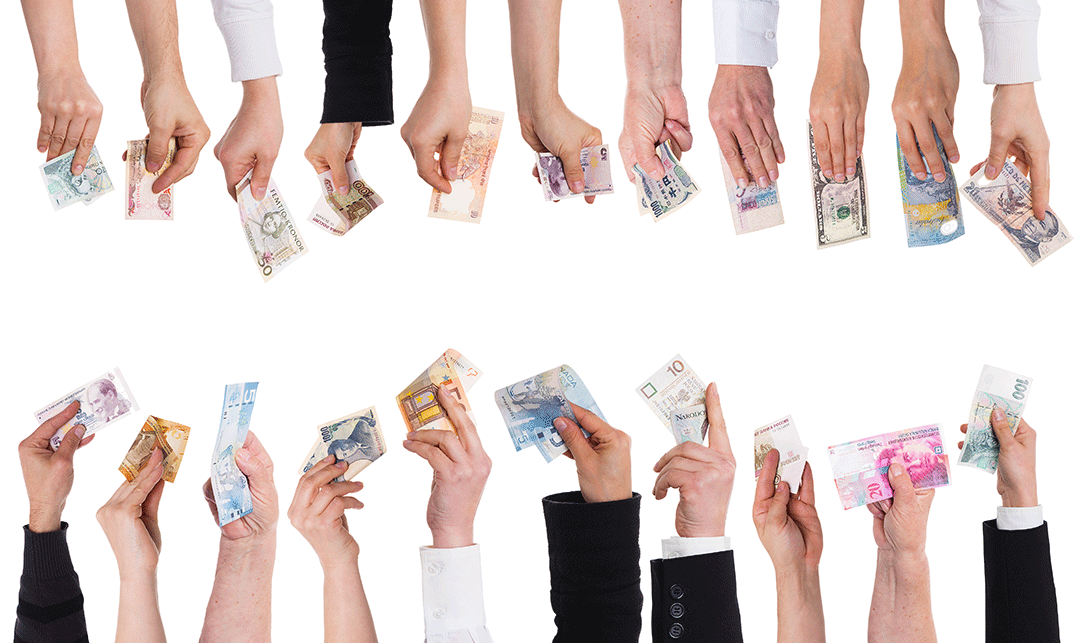
Businesses increasingly operate across borders, whether they are paying international suppliers, employing teams in different countries, or collecting revenue in multiple currencies. When a company’s future expenses and available cash are denominated in different currencies, exchange-rate movements can affect margins, budgets, and the predictability of cash flows.
Currency exposure is often associated with multinational corporations that have dedicated risk-management teams. In practice, smaller companies can face meaningful exposure, too. A business that earns revenue in U.S. dollars but has substantial expenses in euros, for example, may find that currency movements change the effective cost of operating in Europe.
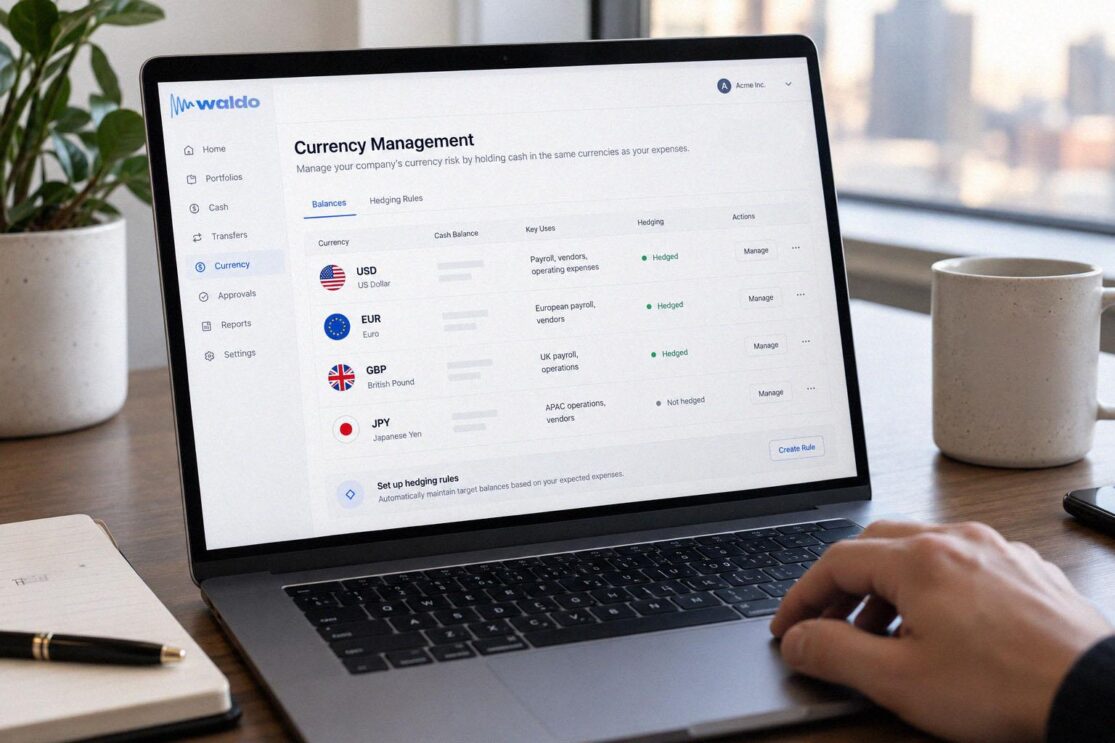
Waldo’s platform includes currency-hedging portfolios designed to help businesses manage this risk. By incorporating currency exposure into treasury management, the platform can help businesses consider not only where their cash is held and how it is invested, but also how exchange-rate fluctuations may affect their financial position.
Hedging does not eliminate every risk, and it involves its own costs and tradeoffs. Its value depends on the company’s underlying exposures, time horizon, and financial objectives. The goal is to make currency risk a more deliberate part of treasury planning, rather than something a business addresses only after exchange rates have moved against it.
This broader view of treasury reflects an important distinction: optimizing cash is not just about maximizing returns. It is also about preserving flexibility and making financial outcomes more predictable.
Bringing Intelligence Into the Workflow
AI is creating new possibilities for how businesses interact with financial systems. Historically, treasury decisions have required specialized knowledge, spreadsheets, market research, and coordination across banking and investment providers.
An AI-native approach can make those workflows more accessible by helping users interpret information, understand the implications of different choices, and connect financial decisions to business needs. Instead of expecting every founder to become an expert in fixed-income markets or currency risk, technology can help make the relevant concepts and tradeoffs easier to navigate.
The distinction matters because financial decisions are interconnected. The appropriate strategy for a company’s excess cash depends on when that money may be needed. Currency exposure may depend on the timing of future payments. A decision that looks attractive in isolation may be less suitable when viewed alongside the company’s liquidity requirements.
The longer-term opportunity is to bring these considerations into a more unified treasury experience, helping businesses move from managing individual financial products toward managing their overall financial position.
Working With the Institutions That Businesses Already Trust
Waldo also has a distribution model that allows businesses to access treasury capabilities through their existing financial relationships. Rather than asking companies to replace their banks, the platform partners with financial institutions to embed treasury tools into digital banking experiences.
Its partnership with Grasshopper Bank illustrates this approach. Through embedded treasury capabilities, a bank can offer business customers additional ways to manage excess cash while maintaining their existing banking relationship.
For financial institutions, this creates an opportunity to deepen relationships with business customers and expand the services available through their platforms. For businesses, it can make more sophisticated financial tools accessible without requiring them to build an entirely new treasury infrastructure.
A Broader View of Business Finance
The next generation of treasury technology will need to address more than the question of where to hold cash. Businesses must balance liquidity, investment decisions, operating needs, and financial risks that can change as they grow.
Waldo’s vision is to make those decisions more accessible through a combination of portfolio management, AI-powered guidance, and tools that address challenges such as currency exposure. By bringing capabilities traditionally associated with large corporate finance departments to a broader range of businesses, the company is working toward a more integrated approach to managing company finances.
For business leaders, the underlying principle is straightforward: cash is not simply a balance on a bank statement. It is a resource that supports operations, creates flexibility, and influences how a company navigates uncertainty. Better tools for managing it can help businesses make those resources work harder while keeping their financial needs in view.